

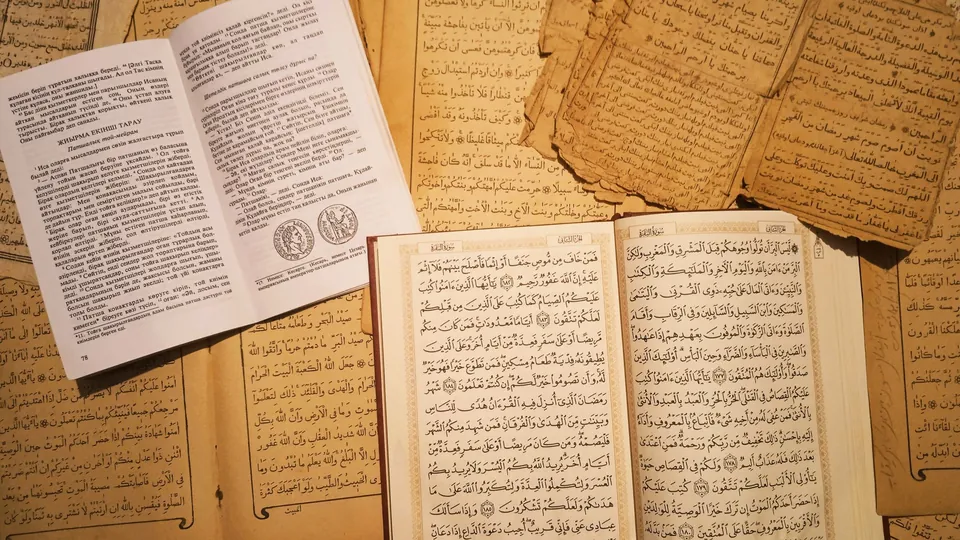
The Sunnah is the way of the Prophet Muhammad ﷺ: what he said, what he did, and what he approved of. A hadith is a single report that records part of that Sunnah, passed down through a named chain of people. So the Sunnah is the thing itself, and hadith are how we know it. Together with the Quran, the Sunnah is the second source of Islam.
As a new Muslim you'll meet these words constantly, along with "sahih", "weak", "Bukhari 1" and "that's a sunnah, not fard". It can feel like everyone else learned a code you missed. This guide explains each term, and shows you how to check a hadith someone sends you.
What is the Sunnah?
Sunnah literally means a path or a practice. In Islam it means the Prophet's whole example, which scholars divide into three kinds:
- His sayings, like "The reward of deeds depends upon the intentions" (Sahih al-Bukhari 1).
- His actions, like the way he prayed, made wudu, ate and treated his family.
- His approvals, things the Companions did in front of him that he saw and didn't object to.
Why follow it? Because the Quran tells Muslims to. The Prophet ﷺ was sent to explain the Quran, not just to deliver it:
بِٱلْبَيِّنَـٰتِ وَٱلزُّبُرِۗ وَأَنزَلْنَآ إِلَيْكَ ٱلذِّكْرَ لِتُبَيِّنَ لِلنَّاسِ مَا نُزِّلَ إِلَيْهِمْ وَلَعَلَّهُمْ يَتَفَكَّرُونَ ٤٤
[We sent them] with clear proofs and written ordinances. And We revealed to you the message [i.e., the Qur’ān] that you may make clear to the people what was sent down to them and that they might give thought.
Translation: Saheeh International. Recitation: Mishary al-Afasy.
The Quran commands prayer, but it's the Sunnah that shows you how many rak'ahs, what to say and when. That's why the Quran links obeying the Messenger to obeying Allah:
مَّن يُطِعِ ٱلرَّسُولَ فَقَدْ أَطَاعَ ٱللَّهَۖ وَمَن تَوَلَّىٰ فَمَآ أَرْسَلْنَـٰكَ عَلَيْهِمْ حَفِيظًا ٨٠
He who obeys the Messenger has obeyed Allāh; but those who turn away - We have not sent you over them as a guardian.
Translation: Saheeh International. Recitation: Mishary al-Afasy.
And it presents him as the example to copy:
لَّقَدْ كَانَ لَكُمْ فِى رَسُولِ ٱللَّهِ أُسْوَةٌ حَسَنَةٌ لِّمَن كَانَ يَرْجُوا۟ ٱللَّهَ وَٱلْيَوْمَ ٱلْـَٔاخِرَ وَذَكَرَ ٱللَّهَ كَثِيرًا ٢١
There has certainly been for you in the Messenger of Allāh an excellent pattern for anyone whose hope is in Allāh and the Last Day and [who] remembers Allāh often.
Translation: Saheeh International. Recitation: Mishary al-Afasy.
You'll also hear the line "whatever the Messenger has given you, take; and what he has forbidden you, refrain from" (59:7). Its immediate context is the sharing out of wealth, but scholars have long quoted it as a general principle about following him.
The other meaning: "it's sunnah"
Here's the part that confuses almost every revert. In fiqh (Islamic law), "sunnah" is also a category of action: something recommended, which earns reward if you do it but isn't a sin to leave. So when someone says "the two rak'ahs before Fajr are sunnah", they mean recommended, not required. When they say "follow the Sunnah", they mean the Prophet's whole way, which includes the required things too. Context usually tells you which one they mean. Our glossary entry on sunnah gives both definitions side by side.
What is a hadith?
Hadith means a report or a piece of news. Each hadith has two parts:
- The isnad, the chain of narrators: "A told me that B told him that C heard the Prophet ﷺ say..."
- The matn, the text itself: the words or the event being reported.
Take the first hadith in Sahih al-Bukhari, about intentions. Al-Bukhari heard it from al-Humaydi, who heard it from Sufyan, from Yahya ibn Sa'id, from Muhammad ibn Ibrahim, from 'Alqamah, who heard 'Umar ibn al-Khattab say it from the pulpit, quoting the Prophet ﷺ. Every link is a named person whose life, memory and honesty scholars studied.
That's what makes the hadith tradition unusual. The great scholar 'Abdullah ibn al-Mubarak put it this way, as Imam Muslim records in the introduction to his Sahih: "The chain of narration is from the Dīn, and were it not for the chain of narration whoever wished could say what he wanted."
You'll also see the term hadith qudsi. That's a hadith in which the Prophet ﷺ reports words from Allah that aren't part of the Quran, often introduced with "Allah says...".
Sunnah vs hadith at a glance
| Sunnah | Hadith | |
|---|---|---|
| What it is | The Prophet's way: sayings, actions, approvals | A report that records one part of it |
| How many | One Sunnah | Thousands of individual reports |
| Can it be weak? | No, the Sunnah itself is what he truly did | Yes, a report can be weak or even fabricated |
| Other meaning | In fiqh: a recommended act | Sometimes used for the whole body of reports |
Sahih, hasan, da'if: what the grades mean
Because people could make mistakes, or even lie, scholars graded every chain. The warning against inventing hadith came from the Prophet ﷺ himself:
And whoever tells a lie against me (intentionally), then (surely) let him occupy his seat in Hell-fire.
Narrated by Abu Hurayrah. Shortened.
| Grade | Meaning | Used for |
|---|---|---|
| Sahih | Authentic: an unbroken chain of upright narrators with precise memory, with no contradiction or hidden flaw | Belief and practice |
| Hasan | Good: meets the same conditions, but a narrator's memory was slightly less precise | Belief and practice |
| Da'if | Weak: a break in the chain or a narrator with a problem | Not relied on for belief or law |
| Mawdu' | Fabricated: invented and falsely attributed | Never used, except to warn people |
A weak hadith isn't necessarily false; it means the chain doesn't prove it. That's why careful teachers only build belief and practice on sahih and hasan reports. You'll find that on our site too: every hadith we quote is sahih or hasan, and we name the grade when it isn't from Bukhari or Muslim.
The six major hadith books
Over the second and third centuries after the Hijrah, scholars traveled widely to collect hadith and sift them. Six collections became the standard references, known as al-Kutub as-Sittah, the Six Books:
| Collection | Compiler | Notes |
|---|---|---|
| Sahih al-Bukhari | Muhammad ibn Isma'il al-Bukhari (d. 256 AH) | Only hadith he judged sahih; the most trusted book after the Quran |
| Sahih Muslim | Muslim ibn al-Hajjaj (d. 261 AH) | Also sahih only; groups narrations of the same hadith together |
| Sunan Abi Dawud | Abu Dawud as-Sijistani (d. 275 AH) | Focused on hadith used in law; mixed grades |
| Jami' at-Tirmidhi | Abu 'Isa at-Tirmidhi (d. 279 AH) | Often states a grade and the scholars' views after each hadith |
| Sunan an-Nasa'i | Ahmad ibn Shu'ayb an-Nasa'i (d. 303 AH) | Known for strict standards among the Sunan |
| Sunan Ibn Majah | Muhammad ibn Yazid ibn Majah (d. 273 AH) | Includes more weak narrations than the others |
Bukhari and Muslim together are called as-Sahihayn, "the two Sahihs". When a hadith is in either, scholars don't usually add a separate grade. For the other four, look for a grade next to the hadith; many modern editions show the gradings of scholars like al-Albani or the Darussalam editors. Other important collections exist too, like Imam Malik's Muwatta' and the Musnad of Imam Ahmad.
How to check a hadith someone sends you
Quotes attributed to the Prophet ﷺ spread fast on social media, and plenty of them aren't from him at all. Here's a simple routine:
- Ask for the reference. A real hadith comes with a collection and a number, like "Sahih Muslim 2664". No reference is a warning sign.
- Look it up. Open our hadith library, choose the collection, then the chapter. Switch to "Whole chapter" and use your browser's find (Ctrl+F or Cmd+F) to jump to the number. Each hadith shows its number, its grade, the Arabic with its full chain, the English, and a link to the same hadith on sunnah.com.
- Check the grade. Sahih or hasan you can rely on. If it's da'if or the grade is missing, don't pass it on as the Prophet's words.
- Compare the wording. Viral versions are often paraphrased or stitched together from different reports. The meaning can shift a lot.
One thing that trips people up is numbering. The same hadith can have different numbers in different editions and translations, and Sahih Muslim numbers often carry letters, like 8a or 1163a, for different narrations of one hadith. If a number doesn't match, search the chapter for a key phrase instead. You can see how it looks by opening the first chapter of Sahih al-Bukhari.
How the Quran and Sunnah fit together
The Quran is the word of Allah, recited in prayer and preserved letter by letter. The Sunnah explains it, shows how to live it and adds rulings the Quran leaves to the Prophet ﷺ. Muslims don't set them against each other. The Quran says of the Prophet ﷺ, "Nor does he speak from [his own] inclination. It is not but a revelation revealed" (53:3-4). Our guide to what Muslims believe shows where both sources fit into the bigger picture.
The best way into hadith is to read a small set of them slowly. Our course 40 Hadith: Foundations of Faith and Intention goes through the classic collection of forty, starting with the hadith on intentions, with each one's source, meaning and what it asks of you.
Questions people ask
What is the difference between Sunnah and hadith?
The Sunnah is the Prophet's way: his sayings, actions and approvals. A hadith is an individual report, with a chain of narrators, that records part of that Sunnah.
What does sahih mean?
Sahih means authentic. A sahih hadith has an unbroken chain of trustworthy narrators with precise memory, and no contradiction or hidden flaw.
What are the types of hadith?
By grade: sahih (authentic), hasan (good), da'if (weak) and mawdu' (fabricated). By source: a hadith qudsi reports words from Allah; most hadith report the Prophet's own words or actions.
Is it a sin to skip a sunnah?
When sunnah means a recommended act, such as the extra rak'ahs around prayer, leaving it isn't a sin, though you miss the reward. Rejecting the Sunnah as a source is a different matter.
Which hadith books are the most authentic?
Sahih al-Bukhari and Sahih Muslim. The other four of the Six Books, Abu Dawud, at-Tirmidhi, an-Nasa'i and Ibn Majah, contain hadith of different grades.
What is a hadith qudsi?
A hadith where the Prophet ﷺ conveys words from Allah that aren't part of the Quran, for example "I am the One, One Who does not stand in need of a partner" (Sahih Muslim 2985).