
Most people can pray at work with a five to ten minute gap and a quiet corner. A typical day shift only overlaps one or two prayers, usually Dhuhr and Asr, and each prayer has a window of an hour or more, not a single fixed minute. So the real job is to find the window, ask your manager for a short flexible break, and know where you'll make wudu. Below is how to do each of those, with a script you can use word for word.
If you've just become Muslim, this can feel like the hardest part of the week. The request is small, though, and in the US, UK and Canada employers are expected to take it seriously.
First, work out which prayers your shift really covers
Allah tells us that prayer has set times:
فَإِذَا قَضَيْتُمُ ٱلصَّلَوٰةَ فَٱذْكُرُوا۟ ٱللَّهَ قِيَـٰمًا وَقُعُودًا وَعَلَىٰ جُنُوبِكُمْۚ فَإِذَا ٱطْمَأْنَنتُمْ فَأَقِيمُوا۟ ٱلصَّلَوٰةَۚ إِنَّ ٱلصَّلَوٰةَ كَانَتْ عَلَى ٱلْمُؤْمِنِينَ كِتَـٰبًا مَّوْقُوتًا ١٠٣
And when you have completed the prayer, remember Allāh standing, sitting, or [lying] on your sides. But when you become secure, re-establish [regular] prayer. Indeed, prayer has been decreed upon the believers a decree of specified times.
Translation: Saheeh International. Recitation: Mishary al-Afasy.
"Specified times" means windows. Each prayer starts at a set point and runs until the next one begins (Fajr ends at sunrise). You can pray any time inside the window, so a meeting at 1:00 doesn't mean you miss Dhuhr if the window runs until 3:30.
| Prayer | Window | Clash with a 9 to 5? |
|---|---|---|
| Fajr | Dawn until sunrise | No, it's before work |
| Dhuhr | Just after midday until Asr begins | Yes, usually around lunch |
| Asr | Mid-afternoon until sunset (best before the sun turns yellow) | Often, in the afternoon |
| Maghrib | Sunset until the red twilight goes | Only in winter, when sunset is early |
| Isha | Nightfall until the middle of the night | No, unless you work late |
The winter row matters if you live far north. In London in December the sun sets before 4pm, so a 9 to 5 can cover Dhuhr, Asr and Maghrib. In June it may cover only Dhuhr. Check your own times on our prayer times page and write down the start of each window for the coming week. Night shifts and early shifts work the same way: list the windows, then see which ones fall inside your hours.
Once you know the windows, plan the smallest possible ask. Dhuhr can often go in your lunch break. Asr might need one extra ten minute break, or a coffee break moved by half an hour. That's usually all.
A four rak'ah prayer like Dhuhr or Asr takes about five minutes once you're comfortable with it, plus a few for wudu. At work you can pray the fard only; how many rakats are in each prayer shows exactly what's required.
What to say to your manager
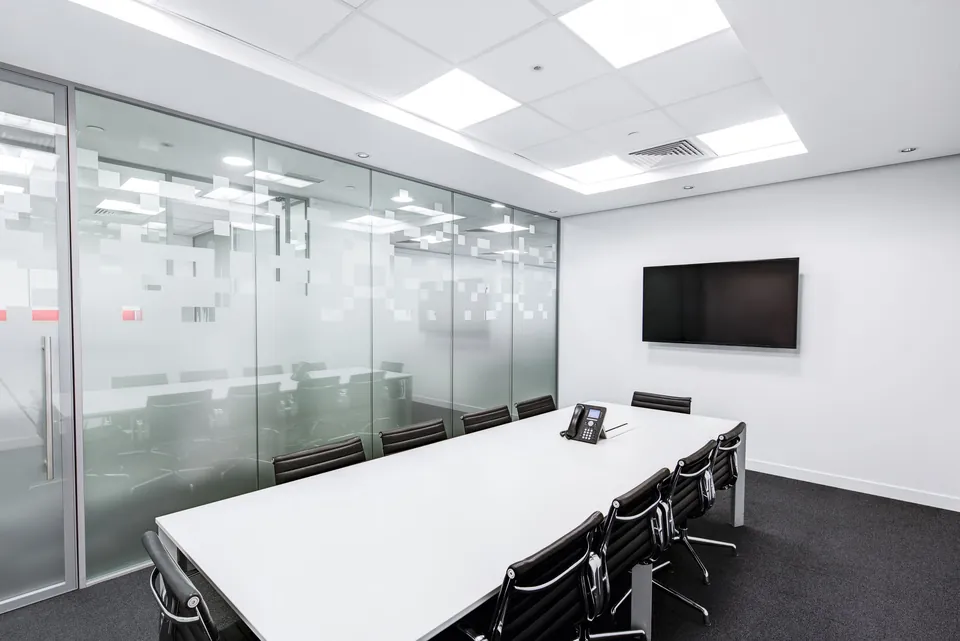
Ask early, in person or by email, and frame it around the work getting done. Managers mostly worry about cover and fairness, so answer those before they ask. Here's a short script you can adapt:
Offer to make up the time, so no one thinks you're getting free breaks, and be flexible on the exact minute, since your windows are long. Afterwards, put the agreement in an email so a future manager can see it.
Most requests end right there. If your manager says no, ask what the concern is. It's often about cover on a busy floor, and moving the break by an hour can fix it.
Where to pray
You don't need a mosque or a special room. The Prophet ﷺ said:
The earth has been made for me (and for my followers) a place for praying and a thing to perform Tayammum, therefore anyone of my followers can pray wherever the time of a prayer is due.
Narrated by Jabir bin 'Abdullah. Shortened.
So any clean spot works: an unused office, a quiet stairwell landing, the back of a stockroom, a clear patch of ground beside your parked car. Face the qibla if you can work it out; our qibla finder will tell you. A thin travel mat in a drawer helps. Don't block fire exits or walkways. If a colleague walks in mid-prayer, that's fine; finish and explain afterwards if they ask.
Larger employers often have a multi-faith room, so ask HR first.
Wudu in a work bathroom
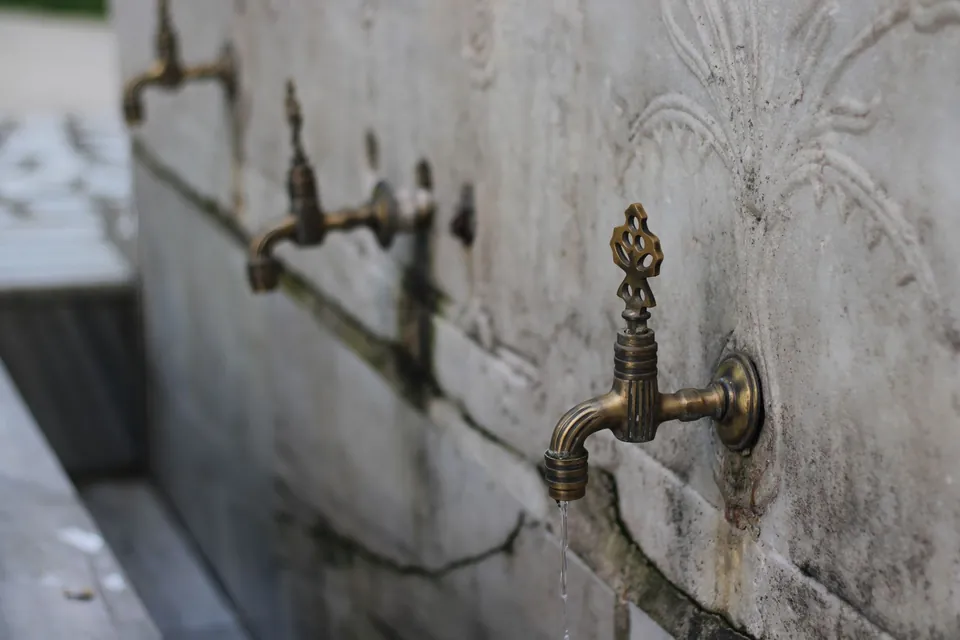
This is the part people feel most awkward about, mostly because of feet in the sink. A few things make it easier:
- Make wudu before you leave home and try not to break it. If it lasts, it carries over to Dhuhr, and sometimes to Asr as well.
- Use a small bottle or jug in a toilet cubicle for your feet instead of lifting them into a shared sink.
- Carry a small towel and wipe the counter after you. Leaving it dry is the easiest way to avoid complaints.
- Wipe over your socks if they meet the conditions (see below), so you don't need to wash your feet at all at work.
For the full steps, see how to make wudu step by step.
Wiping over socks
Wiping over footwear is an established sunnah. Mughirah ibn Shu'bah traveled with the Prophet ﷺ and reported:
he performed ablution and wiped over his socks
Narrated by the son of Mughirah ibn Shu'bah. Shortened. The word translated "socks" here is khuffs, leather foot coverings.
The basic method is agreed: you put the socks on while you already have wudu, and later, when you redo wudu, you wipe a wet hand over the top of each sock instead of washing the feet. In the Hanafi, Shafi'i and Hanbali schools a resident can do this for a day and a night and a traveler for three days and nights, counted from the first time you break your wudu after putting them on (or, in another view, from the first wipe). The Maliki school sets no fixed limit.
Jumu'ah on Fridays
Jumu'ah is the Friday prayer, held at the mosque just after midday in place of Dhuhr. For men it's an obligation, and it takes longer than a normal break: there's a short sermon first, so plan on 45 minutes to an hour once you count the drive. Women may attend but aren't required to.
Ask for it the same way as daily prayer, and offer to make up the time. A longer lunch on Fridays with a shorter one on other days often works. Many mosques run two or three Jumu'ah sessions at different times, which helps if your workplace can only spare you at 1:30, so ask your nearest mosques what they offer. Our guide to praying Jummah explains the prayer itself.
If your shift covers a whole prayer window
Sometimes it really happens: a surgery, a long flight, a factory line you can't leave. First, look again. Asr's window often runs for two or three hours, and a single break anywhere in it is enough. Second, ask whether you can swap shifts or move a break. Prayer at its time is one of the most loved deeds to Allah, so it's worth trying hard before you treat it as impossible.
I asked the Prophet (ﷺ) "Which deed is the dearest to Allah?" He replied, "To offer the prayers at their early stated fixed times."
Narrated by 'Abdullah ibn Mas'ud. Shortened.
If you've truly missed a prayer, pray it as soon as you can. Don't leave it.
The legal basics in the US, UK and Canada
This is general information, not legal advice. Details depend on your employer and where you live, so check with the agency named if you run into trouble.
- United States. Title VII of the Civil Rights Act requires employers with 15 or more employees to reasonably accommodate an employee's religious practice unless doing so would cause undue hardship. The EEOC describes undue hardship as a burden that's substantial in the overall context of the business, and lists flexible scheduling and shift swaps as common accommodations.
- United Kingdom. The Equality Act 2010 protects religion or belief. ACAS guidance says employers don't have to provide time or a room for prayer, but should try to accommodate requests where possible, and that turning one down unreasonably could be discrimination. It suggests options like starting earlier, finishing later or taking a shorter lunch.
- Canada. The Canadian Human Rights Act covers federally regulated employers, such as banks, airlines, railways and federal departments, and requires accommodation up to undue hardship. Most other employers fall under a provincial or territorial human rights code with a similar duty to accommodate. The Canadian Human Rights Commission gives modified work hours for religious practice as one example.
You'll rarely need any of this. A calm, specific request solves almost every case.
Building the habit
The first week is the hardest. After that, colleagues get used to you disappearing for ten minutes at 3pm. Set phone alarms for the start of each window and pray as early in it as work allows, so a surprise meeting doesn't squeeze you out.
If you're still learning the prayer itself, it's fine to pray more slowly at first. The Salah course walks you through the two rak'ah prayer, then three and four, so the work prayers get quicker and calmer over a few weeks.
Questions people ask
How do I ask my boss for time to pray?
Ask early and be specific: which prayers fall in your shift, how long each takes (about ten minutes with wudu), where you could pray, and how you'll make up the time. Then confirm what you agreed in an email.
How do I ask off for Jummah?
Ask for a longer break on Fridays, around 45 minutes to an hour, and offer to make it up by starting earlier or taking a shorter lunch on other days. Check which mosques near you hold a later Jumu'ah.
What if I keep missing prayers because of work?
Pray each missed prayer as soon as you can. Then look at your windows again. Asr and Dhuhr usually have long windows, so a short break moved by an hour often fixes it. If it still doesn't work, talk to your manager or an imam.
Is my employer legally required to let me pray?
In the US, employers with 15 or more staff must reasonably accommodate religious practice unless it causes undue hardship. In the UK and Canada, employers are expected to consider requests fairly.