
The authentic dua for breaking the fast is Dhahabaz-zama'u, wabtallatil-'uruqu, wa thabatal-ajru in sha Allah: "The thirst has gone, the veins are moistened, and the reward is certain, if Allah wills." The Prophet ﷺ said it when he broke his fast (Sunan Abi Dawud 2357, graded hasan). You say Bismillah, eat your date or drink your water, and then say it.
The other iftar dua you'll see everywhere, Allahumma laka sumtu wa 'ala rizqika aftartu, has a weak chain, and we'll explain why below. There's also no fixed dua for starting a fast. And the moment of iftar matters for more than the words, because it's one of the times when a dua isn't turned back.
The iftar dua: Dhahabaz-zama'
the Prophet (ﷺ) said when he broke his fast: Thirst has gone, the arteries are moist, and the reward is sure, if Allah wills.
Narrated by Ibn 'Umar. Graded hasan (al-Albani). Shortened.
Notice what the dua describes. It's the actual feeling of the first sip after a long day: the dry mouth easing, the body coming back. Then it turns from the body to the reward, and even that is said with in sha Allah, because whether a fast is accepted is Allah's to decide.
Because the words describe the thirst having gone, scholars explain that you say this after you've taken your first sip or bite, not before. Before the first bite you say Bismillah, as you would at any meal. Our page on the dua before and after eating covers that and the duas after the meal.
Why "Allahumma laka sumtu" is weak
This is the one printed on most Ramadan calendars, and many of us grew up with it. It's in Sunan Abi Dawud, but the problem is in how it's narrated. Mu'adh ibn Zuhrah wasn't a Companion. He was from the generation after, and the Arabic says the report reached him, without naming who he heard it from. That missing link is why al-Albani and others graded it weak. You'll also see longer versions with wa bika amantu wa 'alayka tawakkaltu added in the middle; those additions have no reliable source at all.
Does that mean saying it is wrong? No. Its meaning is true: you did fast for Allah and you are eating from His provision. You can say it as a general dua of your own. What you shouldn't do is treat it as the sunnah wording. If you're going to learn one iftar dua, learn Dhahabaz-zama'.
The fasting person's dua at iftar
The words above are short, and that's deliberate: iftar is a time to ask Allah for whatever you need, in any language. The Prophet ﷺ named the fasting person among three whose dua isn't rejected:
There are three whose supplication is not rejected: The fasting person when he breaks his fast, the just leader, and the supplication of the oppressed person
Narrated by Abu Hurayrah. Graded hasan (Darussalam). Shortened.
So before you get distracted by the food, take a minute. Ask for forgiveness, for your family, for whatever's weighing on you. Many people make their dua in the last few minutes before sunset as well, while they're waiting, and then say Dhahabaz-zama' after the first sip.
Ibn Majah has a related narration in which the Companion 'Abdullah ibn 'Amr said this when breaking his fast: Allahumma inni as'aluka bi rahmatikal-lati wasi'at kulla shay'in an taghfira li, "O Allah, I ask You by Your mercy, which encompasses all things, to forgive me" (Sunan Ibn Majah 1753, graded hasan by Darussalam). It's 'Abdullah's own dua rather than a wording the Prophet ﷺ taught, but it's a good one to borrow.
How the Prophet ﷺ broke his fast
The sunnah isn't only the dua. Two other details come from authentic hadith:
- Break it promptly. "The people will remain on the right path as long as they hasten the breaking of the fast" (Sahih al-Bukhari 1957). When the sun has set, eat. There's no reward in waiting an extra ten minutes to be safe.
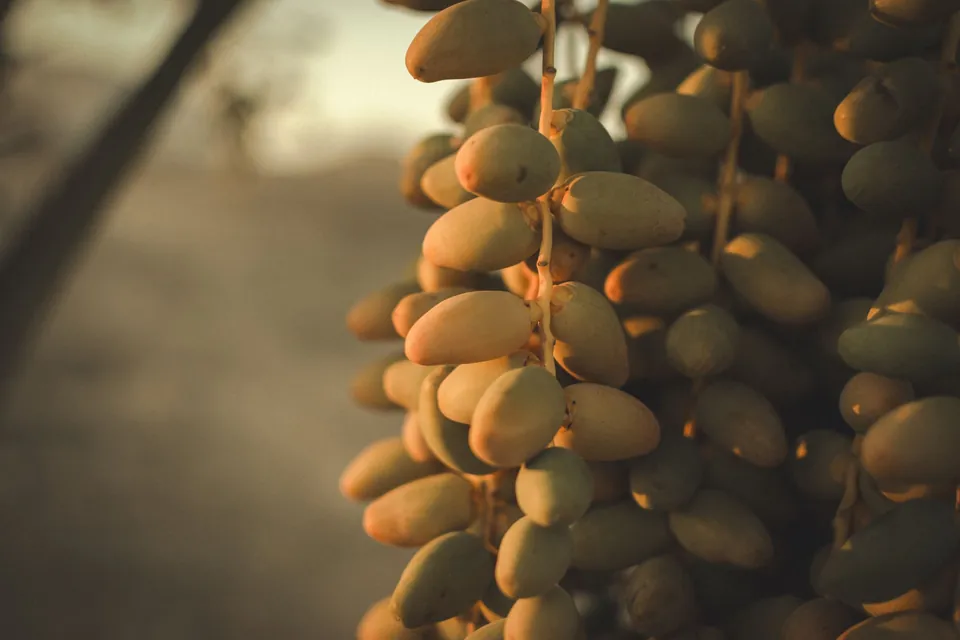
- Start with dates, or water. Anas said the Prophet ﷺ broke his fast before praying Maghrib with fresh dates, or dry dates if there were none, or a few sips of water if there were no dates (Sunan Abi Dawud 2356, hasan sahih).
Then pray Maghrib, and eat properly afterwards. Many families break the fast with dates and water, pray, and sit down to dinner after that, which is easier on an empty stomach anyway.
If someone gives you iftar
When the Prophet ﷺ ate at Sa'd ibn 'Ubadah's house, he made this dua for his hosts:
It's a lovely thing to say at a mosque iftar or at a friend's table, and a good way to thank people when you're new and being invited around a lot in your first Ramadan.
Is there a dua for starting the fast?
No fixed one. A fast needs an intention, but the intention is in your heart: you know you're fasting tomorrow, and you've decided to. Getting up for suhoor is itself a sign of that intention. Nothing has to be said aloud.
You'll often see Wa bi sawmi ghadin nawaytu min shahri Ramadan, "I intend to fast tomorrow for the month of Ramadan", printed as the "dua for suhoor". It isn't from the Prophet ﷺ or the Companions. It was written later as a teaching aid, to help people make the intention. Saying it isn't required, and you don't need to worry if you've never said it.
Putting it together
- In the last minutes before sunset, make your own dua for whatever you need.
- At sunset, say Bismillah and break your fast with a date or water.
- Then say Dhahabaz-zama'u, wabtallatil-'uruqu, wa thabatal-ajru in sha Allah.
- Pray Maghrib, then eat your meal.
If this is your first Ramadan, read your first Ramadan as a new Muslim and our guide to what breaks your fast. The Ramadan guide has suhoor and iftar times for your city.
Our free course How to Ask Allah covers the best times for dua, including iftar, and the authentic duas for each part of the day. For more like this one, see the duas page and our beginner's guide to dua.
Questions people ask
What is the authentic dua for breaking the fast?
Dhahabaz-zama'u, wabtallatil-'uruqu, wa thabatal-ajru in sha Allah: "The thirst has gone, the veins are moistened, and the reward is certain, if Allah wills" (Sunan Abi Dawud 2357, hasan).
Is Allahumma laka sumtu authentic?
Its chain is weak. It's in Sunan Abi Dawud 2358, narrated by Mu'adh ibn Zuhrah, who wasn't a Companion and doesn't name his source; al-Albani graded it da'if. The meaning is fine as a personal dua, but it isn't the sunnah wording.
Do you say the iftar dua before or after eating?
Say Bismillah before your first bite or sip, and the iftar dua after it, since the words describe the thirst having gone.
What is the dua for starting a fast?
There's no fixed dua. The intention is in your heart. "Wa bi sawmi ghadin nawaytu" is a later teaching aid, not a hadith, and you don't have to say it.
Is dua accepted at iftar?
The Prophet ﷺ said the fasting person's dua when he breaks his fast is not rejected (Jami' at-Tirmidhi 3598, hasan). Use the time before and at iftar to ask for what you need.
What dua do you say to someone who gave you iftar?
Aftara 'indakumus-sa'imun, wa akala ta'amakumul-abrar, wa sallat 'alaykumul-mala'ikah (Sunan Abi Dawud 3854, sahih).