

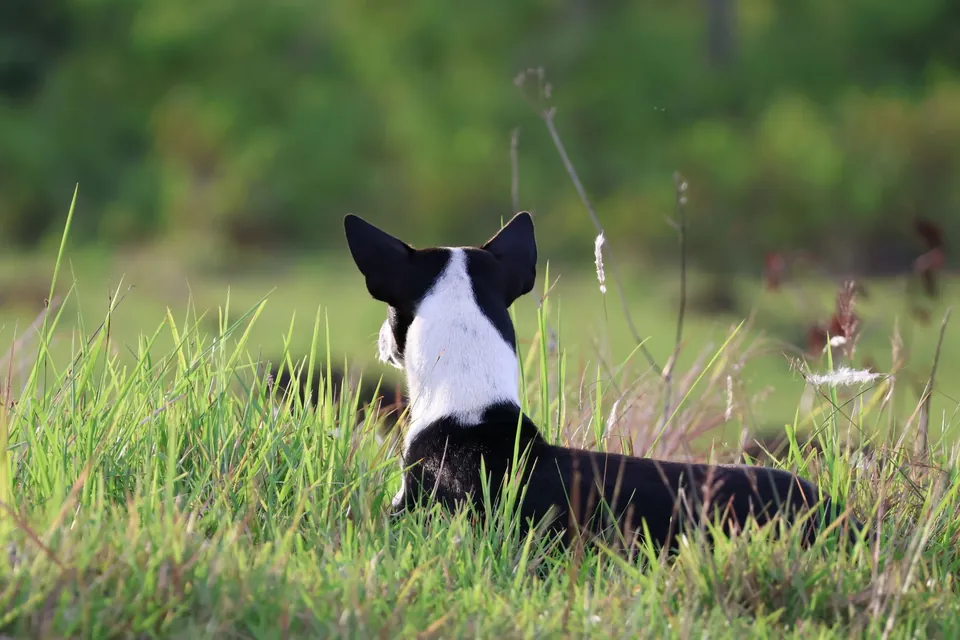
Muslims can keep dogs for a need: guarding livestock or a farm, hunting, and, in the view of many scholars today, work such as guiding a blind person. Most scholars say a dog shouldn't be kept as a house pet without one of those needs. Dogs themselves aren't evil or cursed, and touching a dog isn't a sin. It doesn't break your wudu. The schools differ on whether a dog's saliva or body is impure, and the Maliki school holds that a living dog is pure.
If you had a dog before you became Muslim, you haven't done anything wrong, and you don't need to panic or make a decision tonight. You love that animal, and Islam takes kindness to animals very seriously. Below is what the hadith actually say, how the schools understand them, and some kind, realistic options for you and your dog.
What the hadith say about keeping dogs
Three sets of authentic hadith shape the ruling. The first is about angels:
Angels (of Mercy) do not enter a house wherein there is a dog or a picture of a living creature (a human being or an animal).
Narrated by Abu Talhah.
Scholars explain that these are the angels who bring mercy and blessing, not the angels who record your deeds or guard you, who are never apart from you. The second is about keeping a dog without a need:
He who keeps a dog other than that meant for watching the herd or for hunting loses every day out of his deeds equal to two qirat.
Narrated by Ibn 'Umar.
A qirat here is a measure of reward. Abu Hurayrah's version in Sahih al-Bukhari (2322) says one qirat, and adds dogs for guarding a farm. So the hadith themselves name the exceptions: herding, hunting and farms. The Quran also mentions eating what trained hunting animals catch for you (5:4), which includes hunting dogs.
Notice what these hadith don't say. They don't call dogs evil, and they don't say a Muslim who touches a dog has sinned. The issue is keeping one in the home without a need, and the cost they describe is a loss of reward, not a curse on the dog.
What counts as a need
The hadith name herding, hunting and farm guarding. Scholars have extended that by analogy to other real needs, and many today include:
- Guide dogs for blind people and other assistance dogs.
- Police, search-and-rescue and detection dogs.
- Guard dogs where there's a genuine security need, such as an isolated property. Scholars differ more on this one for an ordinary house.
Companionship on its own isn't counted as a need by most scholars. That's the hard part for a lot of reverts, and it's fine to admit that it's hard.
Are dogs impure? The schools differ
This is where the four schools really do disagree, and it matters for daily life. The hadith everyone starts from is about a dog licking a bowl:
When a dog licks a utensil belonging to any one of you, (the thing contained in it) should be thrown away and then (the utensil) should be washed seven times.
Narrated by Abu Hurayrah.
Another narration in Sahih Muslim adds "using sand for the first time" (279d). The question is what that washing tells us about the rest of the dog.
In practice, if your community is Shafi'i or Hanbali, wash any place a wet dog or its saliva touched, seven times, the first with soil or with water mixed with earth, before you pray in those clothes. If you're Hanafi, wash off saliva; dry fur isn't a problem. If you're Maliki, there's no washing needed for a dog's touch. Our Purity course explains impurities and how to wash them.
Kindness to animals isn't optional
Whatever you decide, Islam doesn't allow you to treat your dog badly. The Prophet ﷺ told this story:
While a dog was going round a well and was about to die of thirst, an Israeli prostitute saw it and took off her shoe and watered it. So Allah forgave her because of that good deed.
Narrated by Abu Hurayrah. 'Israeli' here means from the Children of Israel.
He told another about a man who climbed down a well and carried water up in his shoe for a panting dog, and was forgiven for it. When the Companions asked whether there's reward for serving animals, he said, "Yes, there is a reward for serving any animate" (Sahih al-Bukhari 2363). He also warned about a woman who went to the Fire because she tied up a cat and let it starve (Sahih al-Bukhari 3318).
So abandoning your dog, leaving it at a shelter that might put it down, or neglecting it out of fear would go against everything these hadith teach. Whatever you do, do it with care.
Your options, realistically
There's no single right answer for every revert. Scholars give different advice depending on the situation, so talk it through with your imam. These are the options people usually consider:
- Rehome your dog with someone who'll love it. A family member, a friend or a neighbor your dog already knows is ideal, because you can still visit, and you'll know it's cared for. A breed rescue that rehomes rather than euthanizes is the next best thing. Take your time to find the right home.
- Keep your dog outside the house, if that's safe and kind. Some people move the dog to a well-made kennel in the yard while they look for a home, or for good if there's a guarding need. This only works if the climate and the dog's temperament allow it. A dog that's always lived indoors may suffer outside, and that matters too.
- Keep a working dog. If your dog is genuinely a working animal, a farm dog, a guide or assistance dog, or a guard dog for a real need, most scholars allow it.
- Care for the dog while you work it out. In the meantime, feed it, walk it and look after it properly. Keep a clean room or corner of the house for your prayers, and keep the dog out of it.
Some scholars, particularly within the Maliki school, describe keeping a dog without a need as disliked (makruh) rather than forbidden. Most scholars hold the stricter view. If you're torn, this is exactly the kind of question to take to a local imam who knows your situation, rather than settling it from a website.
Take it one step at a time
New Muslims are often handed a list of changes all at once: prayer, food, clothing, sometimes a name. A pet you love on top of that can feel like too much. Allah doesn't ask more of a soul than it can bear. Learn your prayer first, take this one step at a time, and make dua for a good outcome for your dog. Our guide to your first 30 days as a new Muslim helps with what to do first. For food questions, which often come up at the same time, see our halal food guide.
The free Purity course explains what's pure and impure in Islam, how to clean your clothes and prayer space, and how wudu and ghusl work, one lesson at a time.
Questions people ask
Can Muslims have dogs?
Yes, for a need such as herding, hunting, guarding a farm and, for many scholars, assistance work like guide dogs (Sahih Muslim 1574a, Sahih al-Bukhari 2322). Most scholars say a dog shouldn't be kept as a house pet without a need.
Is it haram to touch a dog?
No. Touching a dog isn't a sin and doesn't break wudu. The schools differ on whether you need to wash afterwards; if both your hand and the dog are dry, nothing transfers in any school.
Are dogs haram in Islam?
Dogs aren't evil or cursed. The Prophet ﷺ praised people who were kind to dogs (Sahih al-Bukhari 3467, 2363). The rulings are about keeping one without a need and about purity, and the great majority of scholars hold that eating dog meat isn't allowed.
I had a dog before I reverted. Do I have to give it away?
Most scholars would advise rehoming a pet dog kindly, or having one only for a real need, but never abandoning it. Take your time, care for it well meanwhile, and ask your imam about your situation.
Do angels not enter a house with a dog?
The hadith says angels of mercy don't enter a house with a dog (Sahih al-Bukhari 3225). Scholars explain this doesn't mean the angels who record your deeds or protect you.
What if my family has a dog?
You're not responsible for a dog that belongs to your family. Keep your prayer space clean, wash according to your school's view, and be kind to the animal.